Spiti Off Beat Package
- Spiti Valley
- Adventure tour
- Min Age : 10+
- Pickup : Airport
Highlights of the Tour:
- Scenic drive from Delhi to Shimla / Narkanda through mountains and valleys
- Visit Sarahan village and its beautiful temples
- Explore Sangla Valley and Chitkul – the last Indian village near the Indo-Tibet border
- Kalpa village with stunning views of the Kinnaur Kailash Range
- Stop at Nako Lake & village, a peaceful Himalayan hamlet
- Explore ancient Tabo Monastery (UNESCO World Heritage Site)
- Experience Dhankar Monastery perched above river confluences
- Discover Kaza town and nearby villages with local culture
- Visit Chandratal Lake, a glistening high-altitude lake that changes colors throughout the day
- Scenic drive to Manali via Atal Tunnel and surrounding valleys
- Explore Kasol and Parvati Valley with riverside trails and serene landscapes
Journey at a Glance :
- Start / End: Delhi
- Highlights: Shimla / Narkanda, Sarahan, Sangla Valley, Chitkul, Kalpa & Kinnaur Kailash, Nako Lake, Tabo Monastery, Dhankar Monastery, Kaza & nearby villages, Chandratal Lake, Manali, Kasol & Parvati Valley, Himalayan landscapes & adventure
- Best Time to Visit:
- May to October – Pleasant weather, accessible roads, and clear mountain views
- July to September – Lush valleys, flowing rivers, and adventure-friendly conditions
- December to February– Snowfall in higher reaches (roads may be restricted)
- Delhi – Shimla / Narkanda – Sangla – Chitkul – Kalpa – Nako – Tabo – Dhankar – Kaza – Chandratal Lake – Manali – Kasol – Delhi
Itinerary:
- Arrive in Delhi (The City of Cities) by morning at the airport or railway station, where you will be greeted by our representative. Proceed on a scenic drive to Shimla, the former summer capital of British India. By evening, arrive in Shimla and check in to your hotel. Relax and unwind, followed by dinner and an overnight stay at the hotel.
- En route, you may visit the famous Yadavindra Gardens, Pinjore (also known as Pinjore Gardens), located in Pinjore, Panchkula district of Haryana. Built in classic Mughal garden style by the rulers of the Patiala dynasty, the gardens are situated about 22 km from Chandigarh on the Ambala–Shimla road.
Shimla :
Situated at an altitude of 2,276 meters, Shimla is the capital of Himachal Pradesh and lies gracefully in the Himalayan foothills. Once the summer capital of British India, the town still serves as the endpoint of the historic Kalka–Shimla narrow-gauge railway, completed in 1903. Shimla is also renowned for its vibrant local markets, especially the handicraft shops known for traditional wooden toys and crafts.
Narkanda :
Perched at an elevation of 2,708 meters, Narkanda is a quiet and picturesque hill town located about 65 km from Shimla along the Hindustan–Tibet Road (NH-5). Surrounded by dense deodar and pine forests, it offers stunning views of snow-covered mountains and sprawling apple orchards. Known as one of India’s oldest ski destinations, Narkanda is cherished for its calm atmosphere and natural beauty, making it an ideal escape from the crowds of Shimla. It also serves as a gateway to Hatu Peak (3,400 meters), famous for its breathtaking panoramic views of the Himalayas. Popular for apple cultivation, Narkanda becomes especially vibrant during the harvest season and is a favored stop for travelers heading toward Sangla, Kalpa, or Spiti.
- After breakfast, check out from the hotel and begin your drive to Sangla via Sarahan. En route, visit the sacred Bhimakali Temple at Sarahan. After the temple visit, continue your journey toward Sangla. If you arrive at Tapri around lunchtime, make sure to stop for a meal at the popular Kangri Dhaba. Enjoy a picturesque drive through the stunning landscapes of the Kinnaur Valley, surrounded by mountains and rivers.
- Along the way, admire the scenic views of the Karcham Dam hydroelectric project. Spend the evening soaking in the tranquil beauty of the Baspa River valley, located at an altitude of approximately 9,000 feet.
- By evening, arrive in Sangla. Dinner and overnight stay at the hotel.
Bhimakali Temple :
Located in Sarahan, Himachal Pradesh, the Bhimakali Temple is dedicated to Goddess Bhimakali, the revered patron deity of the former Bushahr State rulers. Situated around 180 km from Shimla, the temple holds immense religious significance and is considered as sacred as the 51 Shakti Peethas.
- After breakfast, check out from the hotel and drive towards Chitkul, the last inhabited village of India near the Indo-Tibet border. Situated at an altitude of 3,450 meters on the banks of the Baspa River, Chitkul is known for its untouched natural beauty, traditional wooden houses, and serene Himalayan charm.
- Continue your journey to Kalpa, the district headquarters of Kinnaur and once a favored retreat of Lord Dalhousie, who is said to have visited the region on horseback to escape the busy life of Shimla.
- Upon arrival in Kalpa, check in to the hotel and enjoy lunch. Later, explore local attractions including Roghi Village, Suicide Point, Kamru Fort, and Sapni Fort, each offering breathtaking valley and mountain views.
- Spend the evening in the tranquil surroundings of Kalpa village, from where you can admire the magnificent Kinnaur Kailash and Jorkanden peaks. Dinner and overnight stay at the hotel in Kalpa.
About Kalpa :
Located at an altitude of 2,960 meters (9,711 feet), Kalpa was earlier known as Chini when it served as the regional capital. Nestled along the banks of the Sutlej River, this charming town has preserved its heritage and lifestyle for over 500 years. Every corner of Kalpa offers stunning views of the Kinnaur Kailash range, considered the mythical abode of Lord Shiva. Nearby stands a 79-foot natural rock formation resembling a Shivling, which remarkably changes color throughout the day and is clearly visible on a bright, clear day.
- After breakfast, check out from the hotel and begin your drive towards Tabo. Travel along the scenic Indo–Tibet Highway, passing the Khab Bridge, where the Spiti River merges with the Sutlej River at the famous Khab Sangam. Continue your journey through dramatic mountain landscapes toward Tabo.
- En route, visit Gue Village and Monastery, home to the well-preserved 500-year-old mummy of a Tibetan monk, an intriguing and spiritual site. By evening, arrive at your hotel in Tabo. Dinner and overnight stay at the hotel.
Nako Village :
Situated at an altitude of 3,625 meters (11,893 feet), Nako lies between the regions of Kinnaur and Spiti Valley. This enchanting village is one of the most important settlements in Kinnaur district, Himachal Pradesh, and is known for its breathtaking natural beauty. Nako offers several attractions, including the serene Nako Lake, ancient Buddhist temples, and nearby villages such as Rakham. Close to the lake, visitors can also see the footprints of Saint Padmasambhava, who is believed to have meditated here for many years, adding deep spiritual significance to the area.
- After breakfast, check out from the hotel and visit the renowned Tabo Monastery, one of the most important spiritual centers in the region. Later, explore the Tabo Caves, located on a hill rising on the northern side of NH-22, just opposite Tabo village. These ancient meditation caves add to the historical and spiritual charm of the area.
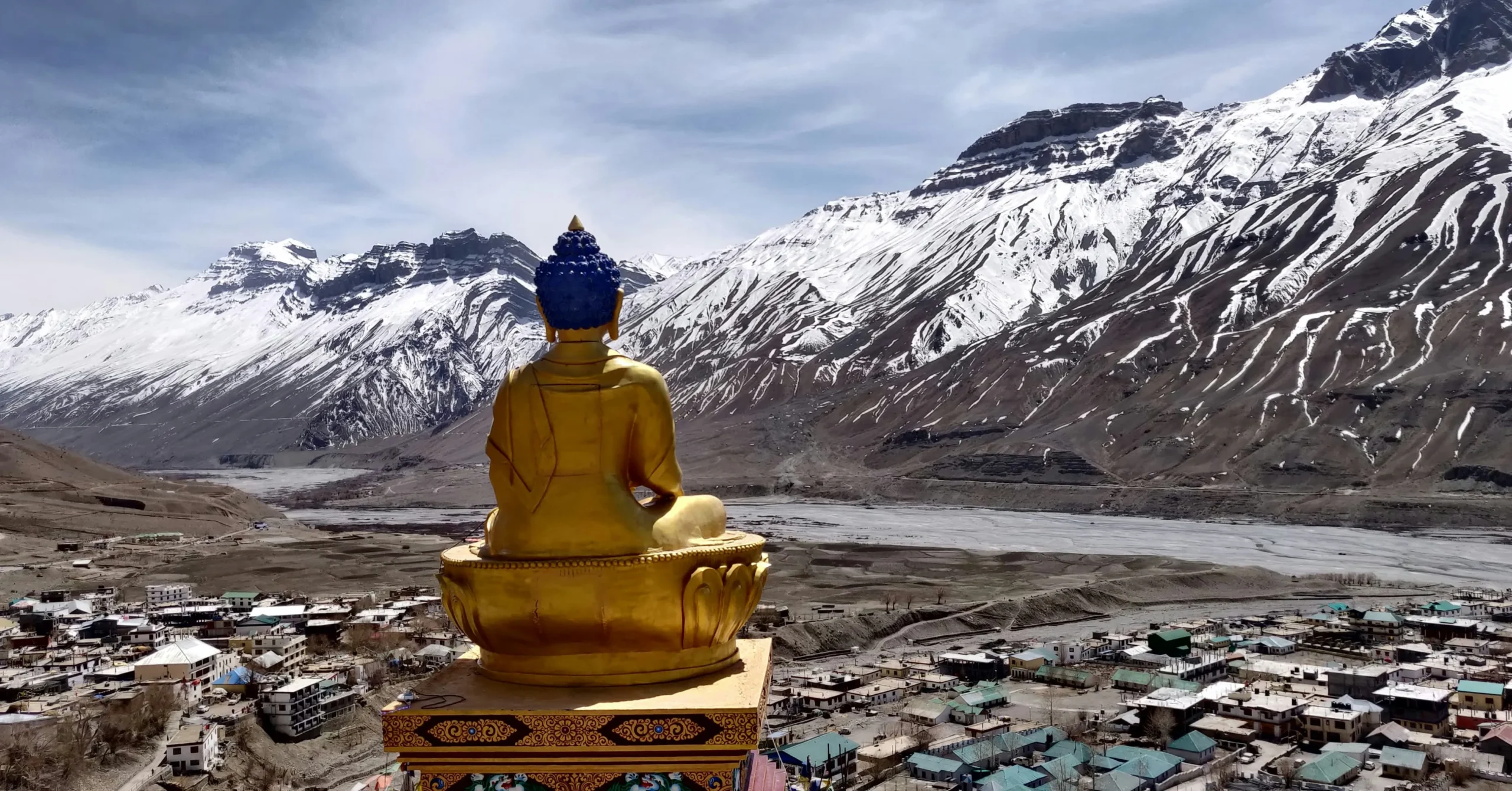
- Continue your journey towards Kaza, stopping en route at Dhankar Village to visit the spectacular Dhankar Monastery (Dhankar Gompa). Perched dramatically at an altitude of 3,894 meters above the confluence of the Spiti and Pin rivers, the monastery lies between Tabo and Kaza and offers breathtaking views of the surrounding valley. After the visit, proceed onward to Kaza.
About Tabo :
Located at an elevation of 3,280 meters (10,760 feet), Tabo is world-famous for its ancient Tabo Monastery, often referred to as the “Ajanta of the Himalayas.” Founded over a thousand years ago, it is the oldest continuously functioning Buddhist monastery in both India and the Himalayan region. The monastery is celebrated for its exquisite murals, stucco images, and deep spiritual significance, making it one of the most revered landmarks of Spiti Valley.
- After breakfast will do full day excursion to Hikkim, Komik & Langza villages.
- You will then head towards Langza Village followed by Hikkim, having the highest post office in the world. You will then head towards Komik, Asia’s highest village. Later, return to your hotel / homestay for dinner & overnight at Kaza.
Langza (14,500 ft / 4,420 mts): Situated at a height of about 14,500 ft above sea level, Langza is one of the highest villages in the world accessible by motorable road, offering stunning Himalayan views.
Hikkim (14,570 ft / 4,440 mts): One of the highest year-round inhabited locations in India, Hikkim is famous for housing the world’s highest post office.
Komik Village (15,049 ft / 4,589 mts): Asia’s highest village, Komik is a serene and beautiful place, ideal for nature and peace lovers.
Key Monastery (13,668 ft / 4,166 mts): A prominent center of Buddhist learning, housing ancient murals, manuscripts, and historic weapons.
Chicham Bridge (13,596 ft / 4,145 mts): Asia’s highest bridge, 113.83 meters long, located above the Samba Lamba Nallah, a 1,000 ft deep gorge. The bridge connects Kibber and Chicham villages, reducing travel distance by around 40 km.
- After early breakfast, check out from the hotel and start your drive to Chandratal Lake, en route crossing Kunzum La Pass. Enjoy the scenic journey surrounded by the majestic Himalayas.
- After crossing Kunzum La Pass (4,551 mts / 14,930 ft), take a right turn 4 km before Batal to reach the location. Arrive at the stunning crescent-shaped Chandratal Lake, renowned for its changing colors throughout the day.
- Overnight stay at Chandratal Lake.
Kunzum La Pass (4,551 mts / 14,930 ft): Navigate through the challenging yet rewarding Kunzum La Pass, relishing panoramic views of towering Himalayan peaks and dramatic landscapes.
Chandratal Lake : Located in the Spiti region of Lahaul and Spiti district, the lake is also called “Moon Lake” due to its crescent shape. Surrounded by mountains on one side and a cirque on the other, Chandratal shimmers beautifully under the starlit sky after sunset. Marvel at the lake’s changing colors throughout the day, and if lucky, you might even glimpse the Milky Way galaxy above its tranquil waters.
- After breakfast, check out from Chandratal Lake and begin your drive to Manali via the Atal Tunnel, enjoying the last glimpses of the majestic Himalayan landscapes.
- Travel through the Atal Tunnel, officially certified by the World Book of Records as the “World’s Longest Highway Tunnel above 10,000 Feet” during a ceremony on 9 February 2022 in New Delhi.
- Constructed in the Pir Panjal ranges under the Rohtang Pass, this all-weather tunnel allows year-round access to the valley, which is normally cut off during winters. The tunnel’s north end opens into Sissu, a picturesque village surrounded by towering peaks.
- Arrive in Manali, check in to the hotel and relax.
Atal Tunnel : The world’s longest highway tunnel above 10,000 feet, cutting through the Pir Panjal ranges under Rohtang Pass. It provides all-weather connectivity to Lahaul-Spiti and dramatically reduces travel time while offering stunning mountain views.
Manali (2,050 mts) : A scenic hill town in Himachal Pradesh’s Kullu Valley, Manali is famed for its snow-capped peaks, adventure sports in Solang Valley, spiritual sites like Hidimba Temple, and vibrant cafés in Old Manali. The town also serves as a gateway to Rohtang Pass, Lahaul-Spiti, and Leh–Ladakh.
- After breakfast, check out from the hotel and drive to Kasol, a serene hamlet nestled in the Parvati Valley.
- Enjoy the scenic journey along lush hills and river valleys.
- Arrive in Kasol, check in to the hotel, and spend the evening exploring the village, riverside cafés, and local markets.
- Overnight stay at Kasol.
Kasol (1,580 mts) : Tucked along the banks of the Parvati River, Kasol is popularly called the “Mini Israel of India” due to its vibrant Israeli influence. Known for its laid-back vibe, pine forests, and scenic riverside cafés, it is a favorite among backpackers and nature lovers.
Parvati River : Flowing beside Kasol, the river offers mesmerizing views and is perfect for leisurely riverside walks and photography.
Manikaran Sahib : Located just 4 km from Kasol, this revered Sikh pilgrimage site is famous for its hot springs and the Gurudwara langar, attracting devotees and visitors alike.
Café Culture : Kasol is dotted with rustic cafés serving Israeli, continental, and Himachali cuisine, making it a hub for food lovers and travelers seeking a relaxed vibe.
Trekking Gateway : Kasol serves as the base for treks to Kheerganga, Tosh, Malana, and other picturesque villages in the Parvati Valley, offering adventure and stunning landscapes.
- Start your day with a hearty breakfast, pack your bags, and check out from the hotel. Meet your driver and begin the journey back to Delhi, passing through scenic towns like Kullu, Mandi, and Chandigarh.
- Arrive in Delhi by evening and conclude your trip, returning home with wonderful memories of your Himalayan adventure.
- Tour Inclusions
- Tour Exclusions
- Terms & Conditions
- Cancellation Policy
Notes
Identity Proof Requirements
- Children / Students: Two photocopies of School or College Photo Identity Card (to be submitted at the time of booking).
- Adults: Original plus photocopy of Aadhaar Card / Driving Licence / Voter ID / Passport.
- Infants: Aadhaar Card or Birth Certificate.
- NRI / Foreign Nationals: Mandatory Passport with valid Indian Visa / OCI Card / PIO Card.
Special Notes
- The Tour Manager’s service will commence from the first destination mentioned in the itinerary.
- Meal services will start from Day 1 at the final arrival destination and continue until departure from the last destination as per the itinerary.
- Meal services are not provided during air travel or transit halts.
Road Transportation
- All transfers and sightseeing will be provided by air-conditioned coach.
- Dalhousie local sightseeing will be conducted by Non A/C Alto / Omni (4 passengers per vehicle).
- Dharamshala local sightseeing will be conducted by Non A/C Maruti Van / Alto (4 passengers per vehicle).
Important Notes
- In case of insufficient bookings, certain tour categories may be merged with other compatible tour groups to ensure smooth operation.
- While every effort is made to maintain the planned itinerary, the programme is subject to change without prior notice due to operational reasons.
- In case of a pandemic or similar situation, some sightseeing spots may be temporarily closed. Alternative sightseeing will be arranged where possible.
- Guests must comply with mandatory travel requirements such as tests, vaccination certificates, self-declarations, or e-pass formalities as per state or central government regulations. Any additional costs incurred will be borne by the guest.
- Manali Travels does not recommend or endorse shopping at any specific shop. Shopping is at the sole discretion of the guest.

- Handpicked hotels in prime locations
- Personalized itineraries for adventure & leisure
- Best prices with exclusive Republic Day discounts
Start Your Trip Now!
Feel Free to contact Us