Ultimate Himalayan Combo – Spiti Valley & Ladakh
- Spiti - Ladakh
- Adventure tour
- Min Age : 10+
- Pickup : Airport
Highlights of the Tour :
- Explore the breathtaking landscapes of Spiti Valley and Ladakh, two of the most remote and scenic regions of the Himalayas.
- Visit the iconic Chandratal Lake, known for its crystal-clear waters and dramatic mountain backdrop.
- Travel across legendary high-altitude passes including Rohtang Pass, Kunzum Pass, Baralacha La, Taglang La, and Khardung La.
- Discover ancient Buddhist monasteries such as Key, Thiksey, Diskit, and Shey, reflecting rich Himalayan spiritual heritage.
- Experience local life in high-altitude villages like Kibber, Hikkim, Losar, and Nubra Valley.
- Enjoy unique experiences like camel rides at Hunder Sand Dunes and tranquil moments at Pangong Lake.
- A perfect blend of adventure, culture, spirituality, and natural beauty.
Journey at a Glance :
- Start / End: Manali
- Best Time to Visit: All year round – pleasant weather and scenic landscapes, with snow in winter at higher altitudes.
- Highlights: Manali, Batal, Chandratal Lake, Kaza, Key Monastery, Kibber Village, Leh, Monasteries & Palaces, Nubra Valley, Khardung La, Pangong Lake, Himalayan landscapes, Adventure & Culture
- Manali – Batal – Chandratal Lake – Kaza – Key Monastery – Kibber Village – Leh – Nubra Valley – Pangong Lake – Leh
Itinerary:
Travel & Route:
- Arrival at Kullu-Manali Airport / Railway Station.
- Transfer to hotel and check-in.
Daily Highlights:
- Stroll along Mall Road, a lively center for shopping, cafés, and local handicrafts. Pick up Himachali woollens, handicrafts, and souvenirs.
- Visit Hadimba Devi Temple, set in dense cedar forests. This 16th-century pagoda-style wooden temple is dedicated to Hadimba, wife of Bhima from the Mahabharata. Its unique architecture and serene surroundings make it a photographer’s paradise.
- Optional visit to Manu Temple, dedicated to Sage Manu, believed to be the creator of humankind according to Hindu mythology.
Cultural & Attraction Notes: Manali is a vibrant blend of adventure, culture, and spirituality. The town’s streets, lined with shops and cafés, showcase the unique Himachali lifestyle. Traditional architecture, local cuisine such as Siddu and Babru, and ancient temples offer travelers a deep sense of the region’s history and spiritual traditions. The Beas River and surrounding cedar forests provide both natural beauty and opportunities for riverside walks, allowing visitors to immerse themselves fully in the Himalayan ambiance.
Travel & Route:
Distance: Approx. 150 km | 7–8 hours.
Route: Manali → Rohtang Pass → Baralacha La → Gramphoo → Keylong → Batal.
Daily Highlights:
- Cross Rohtang Pass (3,978 m) with panoramic views of glaciers, mountains, and snow-capped peaks. Adventure seekers can enjoy snow activities here.
- Continue via Baralacha La Pass (4,890 m) – high-altitude barren pass with surreal landscapes.
- Stop at Keylong, a small town with monasteries, traditional Himachali homes, and vibrant local markets.
Cultural & Attraction Notes:
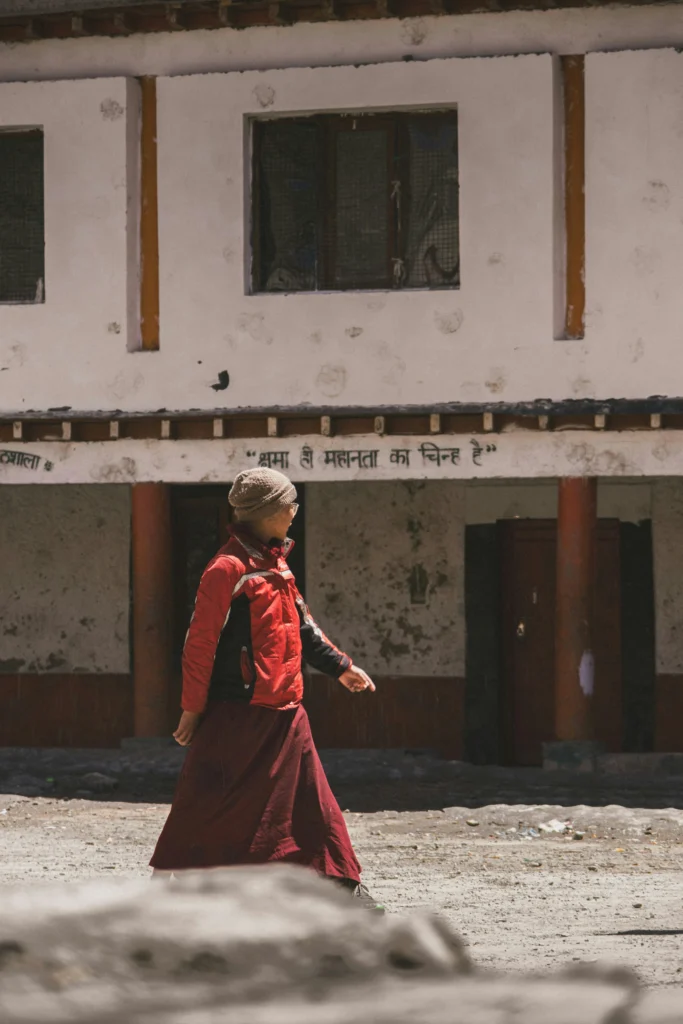
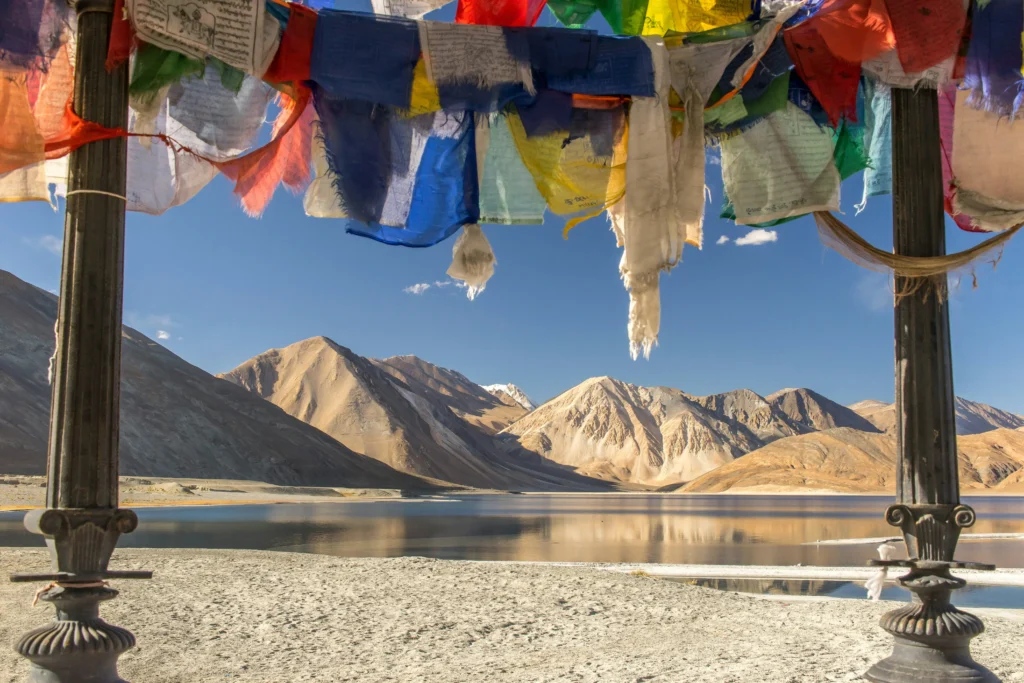
Batal is a remote plateau at high altitude, surrounded by stark mountains and glaciers, providing an authentic Himalayan experience. This region reflects the simple lifestyle of shepherds and mountain communities who move seasonally across high pastures. Along the journey, travelers can witness ancient chortens (stupas), colorful prayer flags, and small villages, all representing the enduring Tibetan Buddhist influence on this part of Himachal Pradesh. These scenic and cultural experiences offer a deep connection to the traditional high-altitude Himalayan way of life.
Travel & Route :
Short trek / drive : 4–5 km from Batal.
Daily Highlights:
- Trek or drive to Chandratal Lake, the crescent-shaped “Moon Lake”.
- Spend the day walking along the lake, photographing the turquoise waters, or meditating amidst the mountains.
- Sunset views over the surrounding snow-capped peaks.
Cultural & Attraction Notes: Chandratal Lake is not only a visual marvel but also a site of local legend. It is said that the moonlight illuminates the lake in a mystical way, inspiring meditation and spiritual reflection among visitors. The area is also home to high-altitude wildlife including marmots, mountain goats, and various bird species. Camping beside the lake allows travelers to experience a rare sense of peace under the star-filled Himalayan sky. The barren yet serene landscapes exemplify the untouched beauty of the Lahaul region.
Travel & Route:
Distance: Approx. 120 km | 5–6 hours.
Route: Chandratal → Batal → Kunzum Pass → Losar → Kaza.
Daily Highlights:
- Cross Kunzum Pass (4,590 m) with breathtaking views.
- Stop at Losar Village, the first inhabited village of Spiti Valley.
- Evening in Kaza town, exploring its streets and local markets.
Cultural & Attraction Notes: Kaza is the cultural heart of Spiti Valley and offers a window into Tibetan Buddhist traditions. The town’s architecture—stone houses with flat roofs, small monasteries, and colorful prayer flags—reflects centuries of heritage. Local markets provide insight into daily life, showcasing handicrafts, woollens, and snacks. Visitors can learn about the festivals of Spiti, including Losar (Tibetan New Year), which features prayer rituals, dances, and community gatherings that reveal the spiritual and communal essence of life in the valley.
Travel & Route :
Local sightseeing around Kaza.
Daily Highlights :
- Explore Key Monastery, perched on a hill overlooking the Spiti River.
- Visit Kibber Village, one of the highest motorable villages in the world.
- Optional: Hikkim Village, home to the world’s highest post office.
Cultural & Attraction Notes : Key Monastery serves as both a spiritual center and a school for Buddhist monks. Its ancient murals and prayer halls reflect centuries of religious learning and devotion. Kibber Village, with its stone houses, traditional farming, and pastoral life, gives visitors insight into high-altitude Himalayan living. The surrounding landscapes, with rare wildlife and alpine meadows, add to the cultural richness by showing how humans have adapted to one of the most extreme environments in India.
Travel & Route:
Distance: Approx. 480 km via Manali-Leh Highway | Full-day scenic drive.
Cross Taglang La (5,328 m), Lachulung La (5,059 m), and More Plains.
Daily Highlights:
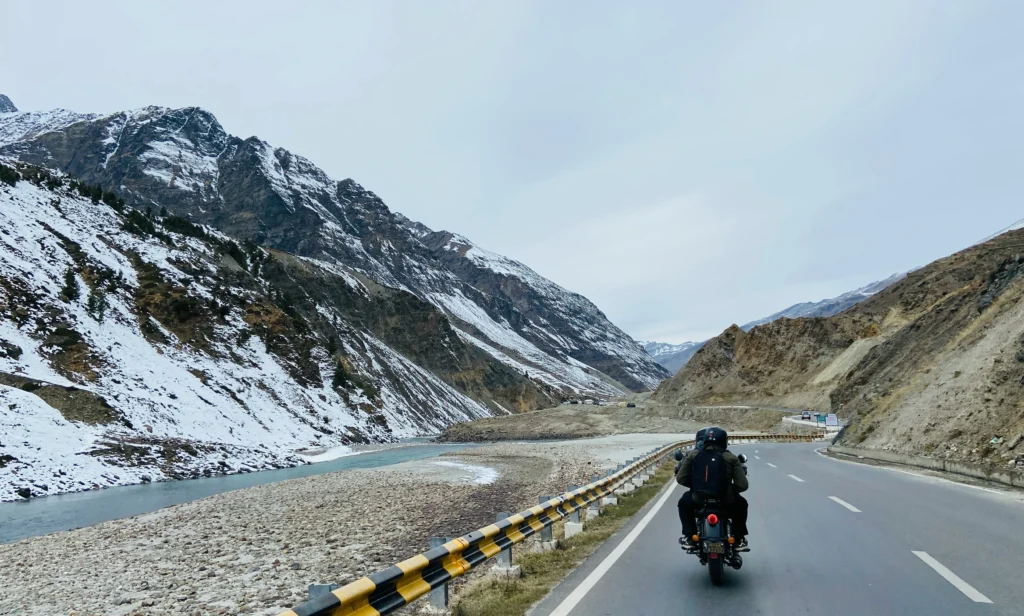
- Scenic journey through high-altitude deserts, rivers, and barren mountains.
- Evening arrival in Leh, check-in at hotel.
Cultural & Attraction Notes:
The drive from Spiti to Ladakh highlights a dramatic change in landscape from green valleys to arid high-altitude deserts. Travelers encounter small settlements with Tibetan Buddhist stupas and prayer flags, symbolizing spiritual continuity across these regions. The Manali-Leh highway itself is part of historical trade and pilgrimage routes connecting India with Tibet and Central Asia.
Daily Highlights:
- Visit Shanti Stupa for panoramic views of Leh town and surrounding mountains.
- Explore Leh Palace, a 17th-century royal residence overlooking the old town.
- Visit Thiksey Monastery, one of Ladakh’s most impressive monasteries.
- Explore Shey Palace & Monastery, the former capital of Ladakh.
Cultural & Attraction Notes:
Leh is the cultural and spiritual heart of Ladakh, deeply influenced by Tibetan Buddhism. The town is dotted with ancient monasteries, whitewashed stupas, and prayer wheels that reflect centuries of monastic tradition. Thiksey Monastery, resembling Tibet’s Potala Palace, houses a massive statue of Maitreya Buddha and offers insight into Buddhist rituals, scriptures, and daily monastic life. Leh Palace stands as a reminder of Ladakh’s royal past, showcasing traditional Tibetan architecture and offering views of the old town’s mud-brick houses. Walking through Leh’s markets allows travelers to observe Ladakhi life closely—locals in traditional dress, shops selling turquoise jewelry, prayer flags, and handcrafted woollens, and cafés serving local dishes such as thukpa, momos, and butter tea.
Travel & Route:
Distance: Approx. 160 km | 5–6 hours.
Cross Khardung La Pass (5,359 m), one of the highest motorable roads in the world.
Daily Highlights:
- Drive through dramatic mountain terrain and deep valleys.
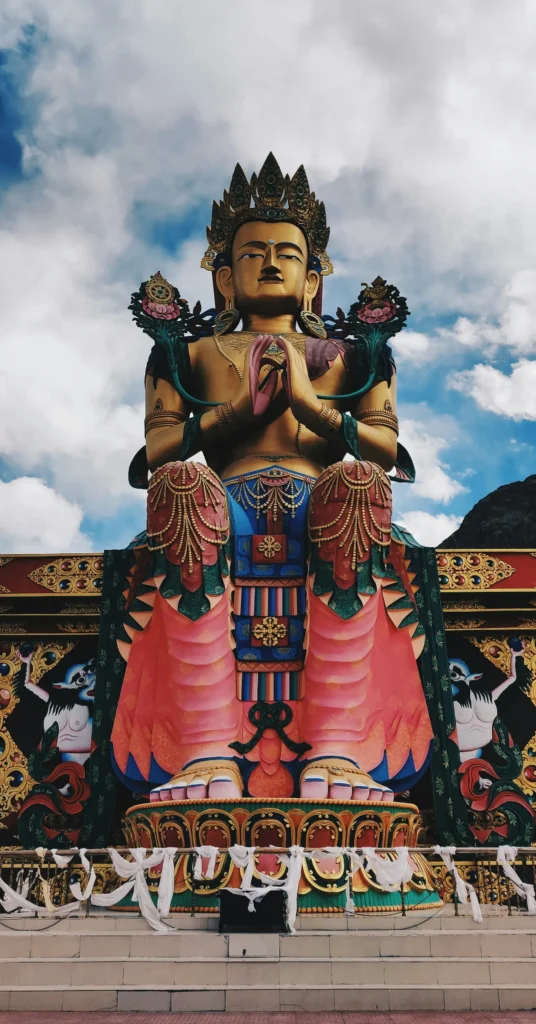
- Visit Diskit Monastery, famous for its giant statue of Maitreya Buddha.
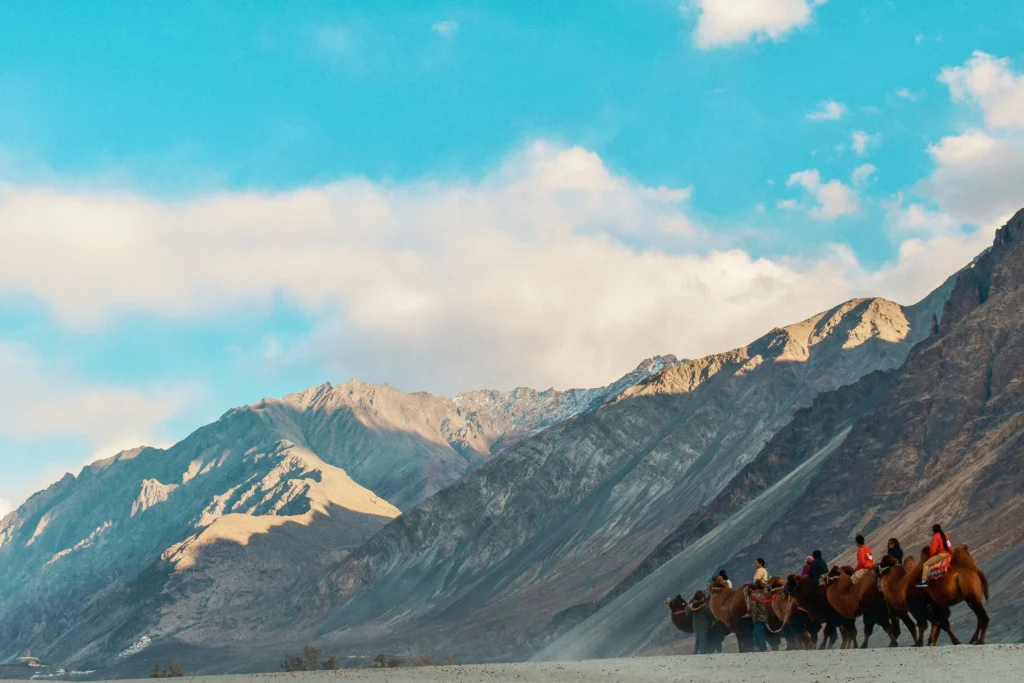
- Explore Hunder Sand Dunes and enjoy a camel ride on double-humped Bactrian camels.
Cultural & Attraction Notes:
Nubra Valley, also known as the “Valley of Flowers of Ladakh,” is a striking contrast to the barren mountains surrounding it. Historically, Nubra was an important stop on the ancient Silk Route, linking India with Central Asia and Tibet. Diskit Monastery, perched on a hilltop, offers spiritual calm and panoramic views of the valley below. The presence of sand dunes at such a high altitude is unique, and the rare Bactrian camels—remnants of Silk Route trade—add to Nubra’s charm. Local villages in Nubra sustain themselves through apricot orchards, barley farming, and livestock, offering visitors a glimpse into Ladakh’s resilient agrarian lifestyle shaped by extreme climatic conditions.
Travel & Route:
Distance: Approx. 250 km | 6–7 hours.
Drive through remote landscapes, river crossings, and mountain passes.
Daily Highlights:
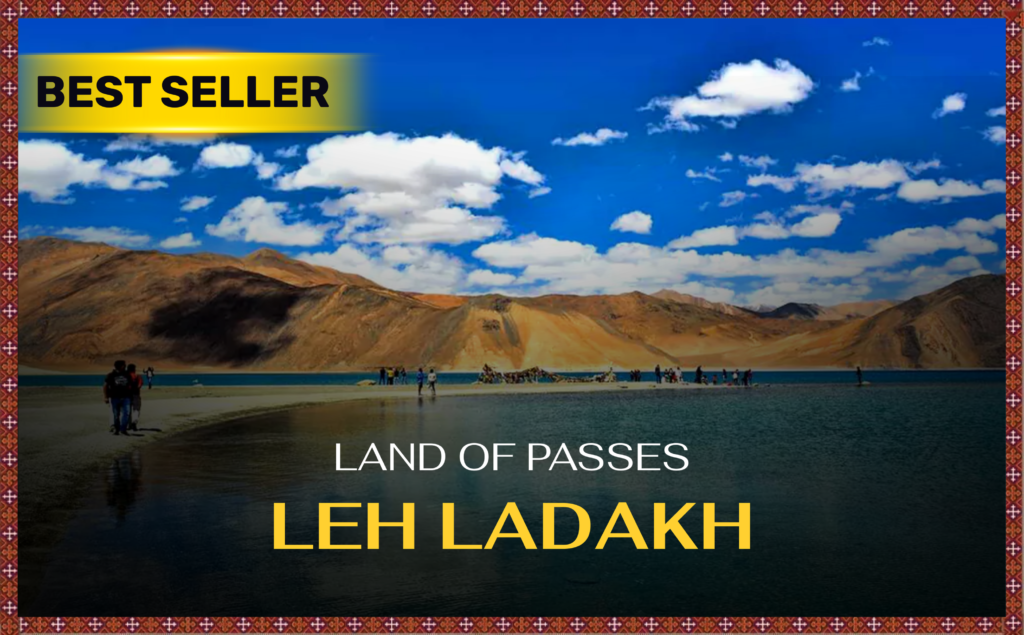
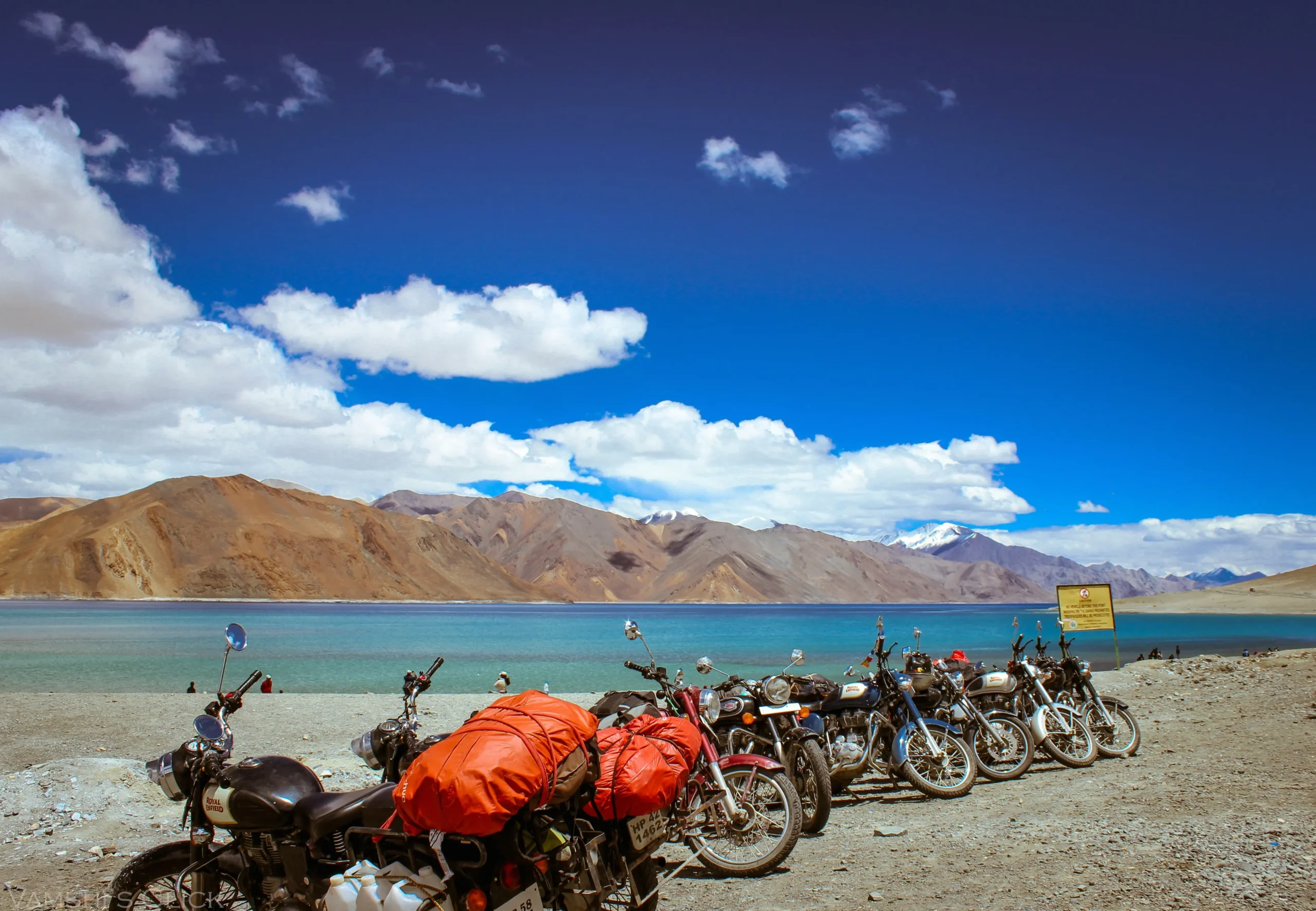
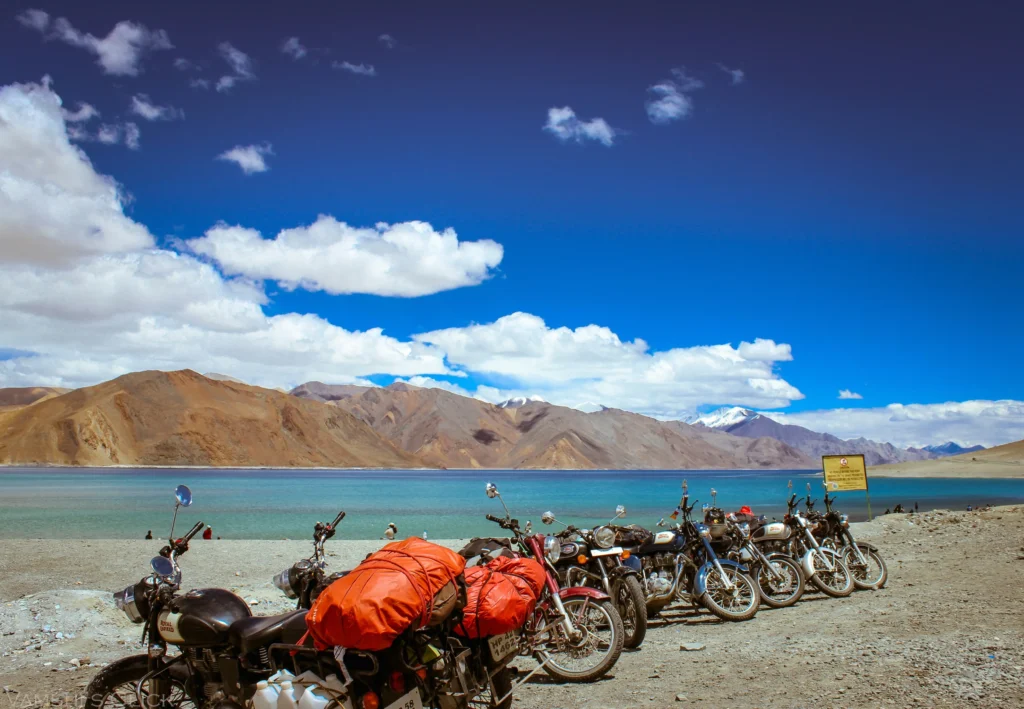
- Arrival at Pangong Lake (4,350 m), famous for its changing shades of blue.
- Leisure time by the lakeshore for photography and nature walks.
- Evening at lakeside camps with sunset views.
Cultural & Attraction Notes:
Pangong Lake is one of the most iconic natural wonders of Ladakh, stretching across India and into Tibet. Its crystal-clear saline waters reflect different hues of blue, green, and turquoise depending on the sunlight. Despite its harsh surroundings, the lake supports migratory birds such as Brahminy ducks and seagulls during summer months. The silence and vastness of Pangong create a deeply meditative experience, making it a place of reflection and natural wonder. Staying overnight near the lake allows travelers to experience Ladakh’s pristine night sky, filled with stars, free from urban light pollution.
Travel & Route:
Distance: Approx. 150 km | 5–6 hours.
Return journey to Leh via scenic mountain roads.
Daily Highlights:
- Sunrise views at Pangong Lake, offering breathtaking colors over the water.
- Drive back to Leh with photo stops along the way.
- Transfer to Leh Airport for onward journey.
Cultural & Attraction Notes:
The final day offers a peaceful conclusion to the Himalayan journey, with early morning reflections at Pangong Lake symbolizing the untouched beauty of Ladakh. As you return to Leh, the landscape serves as a reminder of the region’s unique blend of natural extremes and spiritual depth. This journey through Spiti and Ladakh leaves travelers with a deeper appreciation of Himalayan culture, monastic traditions, high-altitude living, and the enduring harmony between nature and human life in one of the world’s most remote regions.
- Tour Inclusions
- Tour Exclusions
- Terms & Conditions
- Cancellation Policy
Notes
Identity Proof Requirements
- Children / Students: Two photocopies of School or College Photo Identity Card (to be submitted at the time of booking).
- Adults: Original plus photocopy of Aadhaar Card / Driving Licence / Voter ID / Passport.
- Infants: Aadhaar Card or Birth Certificate.
- NRI / Foreign Nationals: Mandatory Passport with valid Indian Visa / OCI Card / PIO Card.
Special Notes
- The Tour Manager’s service will commence from the first destination mentioned in the itinerary.
- Meal services will start from Day 1 at the final arrival destination and continue until departure from the last destination as per the itinerary.
- Meal services are not provided during air travel or transit halts.
Road Transportation
- All transfers and sightseeing will be provided by air-conditioned coach.
- Dalhousie local sightseeing will be conducted by Non A/C Alto / Omni (4 passengers per vehicle).
- Dharamshala local sightseeing will be conducted by Non A/C Maruti Van / Alto (4 passengers per vehicle).
Important Notes
- In case of insufficient bookings, certain tour categories may be merged with other compatible tour groups to ensure smooth operation.
- While every effort is made to maintain the planned itinerary, the programme is subject to change without prior notice due to operational reasons.
- In case of a pandemic or similar situation, some sightseeing spots may be temporarily closed. Alternative sightseeing will be arranged where possible.
- Guests must comply with mandatory travel requirements such as tests, vaccination certificates, self-declarations, or e-pass formalities as per state or central government regulations. Any additional costs incurred will be borne by the guest.
- Manali Travels does not recommend or endorse shopping at any specific shop. Shopping is at the sole discretion of the guest.

- Handpicked hotels in prime locations
- Personalized itineraries for adventure & leisure
- Best prices with exclusive Republic Day discounts
Start Your Trip Now!
Feel Free to contact Us